
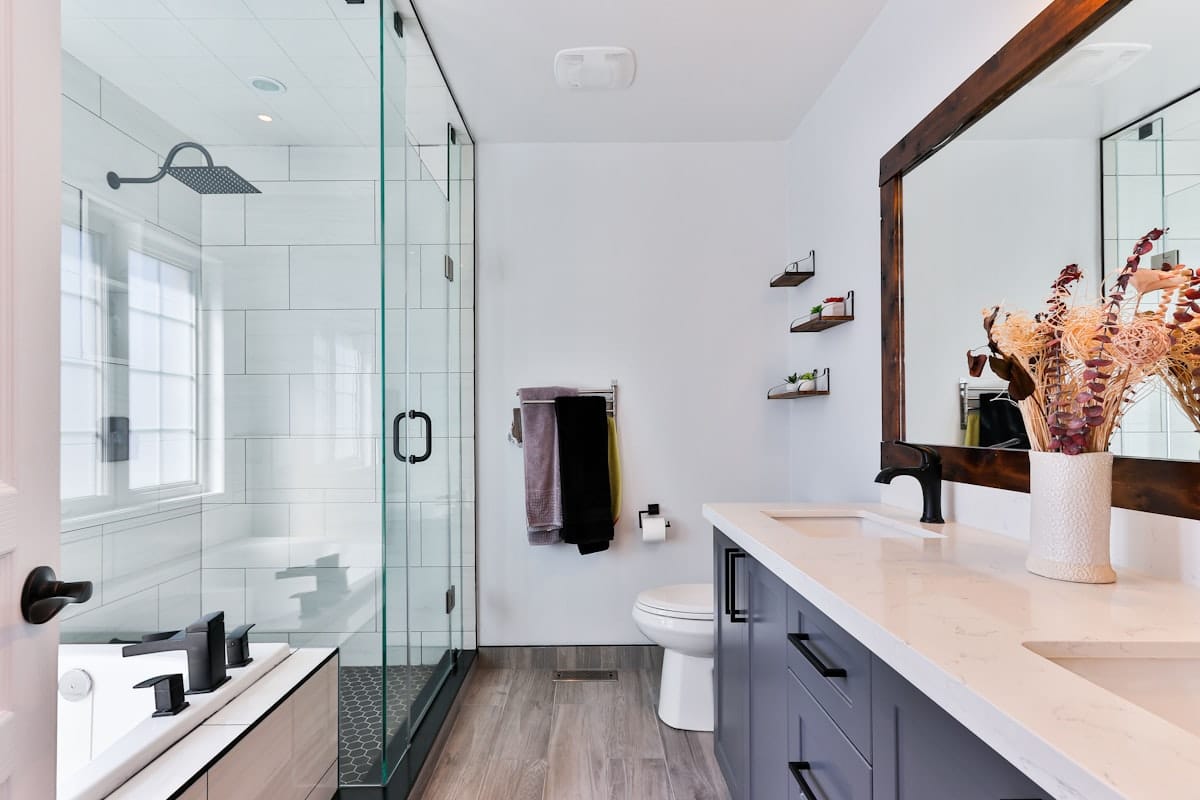
Zellige tile has moved from boutique design circles to mainstream design consciousness in just a few years — and for good reason. Its handmade character, shimmering surface variation, and deep historical roots make it genuinely different from anything a machine can produce. At D. Marie Interiors, we’ve been specifying zellige for years, and we’ve watched it transform bathrooms, kitchens, and entryways in ways that no other tile quite manages. Here’s what you need to know before you buy.
What Is Zellige Tile?
Zellige (pronounced “zeh-leej”) is a handmade glazed terracotta tile originating from Morocco, where it has been produced using the same methods for over a thousand years. Each tile is formed by hand, fired in a traditional kiln, and hand-cut to its final shape. The result is a tile with slight dimensional variation — no two tiles are exactly alike — and a glaze that catches and reflects light differently across its surface depending on your viewing angle.
This variation is not a defect. It’s the entire point. A zellige wall shimmers and shifts as you move through the room in a way that machine-made tile simply cannot replicate. The surface feels alive.
Where Zellige Works Best
Bathroom walls and shower surrounds are where zellige does its most impressive work. Installed in a simple running bond or stacked pattern, a zellige shower wall creates a handcrafted, almost jewel-like effect that references both Moroccan craftsmanship and contemporary luxury. White, off-white, sage, and warm terracotta are the most versatile colors for this application.
Kitchen backsplashes are zellige’s second natural home. Because the backsplash is a relatively small surface, zellige’s higher price point becomes more manageable, and its handmade character is visible from across the room. Pair with flat-front cabinetry and minimal hardware for a quiet luxury kitchen that will look current for decades.
Entryways and powder rooms are perfect candidates for zellige because the surface area is small and the impact is high. A zellige floor or wainscoting in an entryway sets a tone for the entire home that a standard tile cannot.
Zellige Color Guide
Zellige is available in a wide palette, but the most enduring and versatile choices are: off-white and cream (works with everything, stays timeless), sage and olive green (the current favorite, pairs with warm wood tones), terracotta and warm rust (richly warm, pairs with linen and stone), and deep navy and teal (bold and dramatic, best as an accent rather than a full surround). Avoid trendy or highly saturated colors if you’re planning to stay in your home for many years.
What Does Zellige Tile Cost?
Zellige tile is more expensive than standard ceramic or porcelain — typically ranging from $15 to $40 per square foot for the material alone, depending on color, size, and source. Installation costs are also higher because the dimensional variation of handmade tiles requires more skill and time to set correctly. Budget for professional installation and plan for 15–20% extra material to account for cuts and the natural variation in tile size.
The investment is worth it for the right application. A small zellige backsplash or powder room wall is a permanent design decision that will outlast virtually every other trend-driven choice you could make.
Frequently Asked Questions
Is zellige tile hard to maintain?
Zellige is terracotta-based, which means it’s slightly more porous than porcelain. Sealing is strongly recommended, particularly for floor applications and areas prone to staining. Once sealed properly, maintenance is simple — wipe with a damp cloth and avoid harsh acidic cleaners that can damage the glaze over time.
Does zellige tile need to be sealed?
Yes — sealing is recommended for virtually all zellige applications, and mandatory for floors and wet areas. Use a penetrating sealer specifically formulated for terracotta or porous tile. Re-seal every 1–3 years depending on traffic and use.
How is zellige different from other handmade tile?
Zellige is specifically Moroccan in origin and production method — a heritage that spans over a millennium. Other handmade tiles (Italian, Spanish, American artisan tile) share some of zellige’s character but differ in clay body, glaze technique, and dimensional variation. Authentic zellige has a specific shimmer and surface movement that’s difficult to replicate even with other handmade products.
Can you use zellige tile outdoors?
Standard zellige is not rated for outdoor use in climates with freeze-thaw cycles, as the terracotta body can crack with repeated freezing. In mild climates, covered outdoor applications may work. Always confirm the specific product’s outdoor rating with your supplier before installing in any exterior application.
Considering Zellige for Your Home?
Zellige is one of those materials that rewards the investment — and the right application of it will be the feature your guests comment on for years. If you’d like help choosing a color, layout, and application that works for your specific project, our design team is available to guide you. We work with clients across Central Washington and can help you source and specify zellige for bathrooms, kitchens, and beyond.