
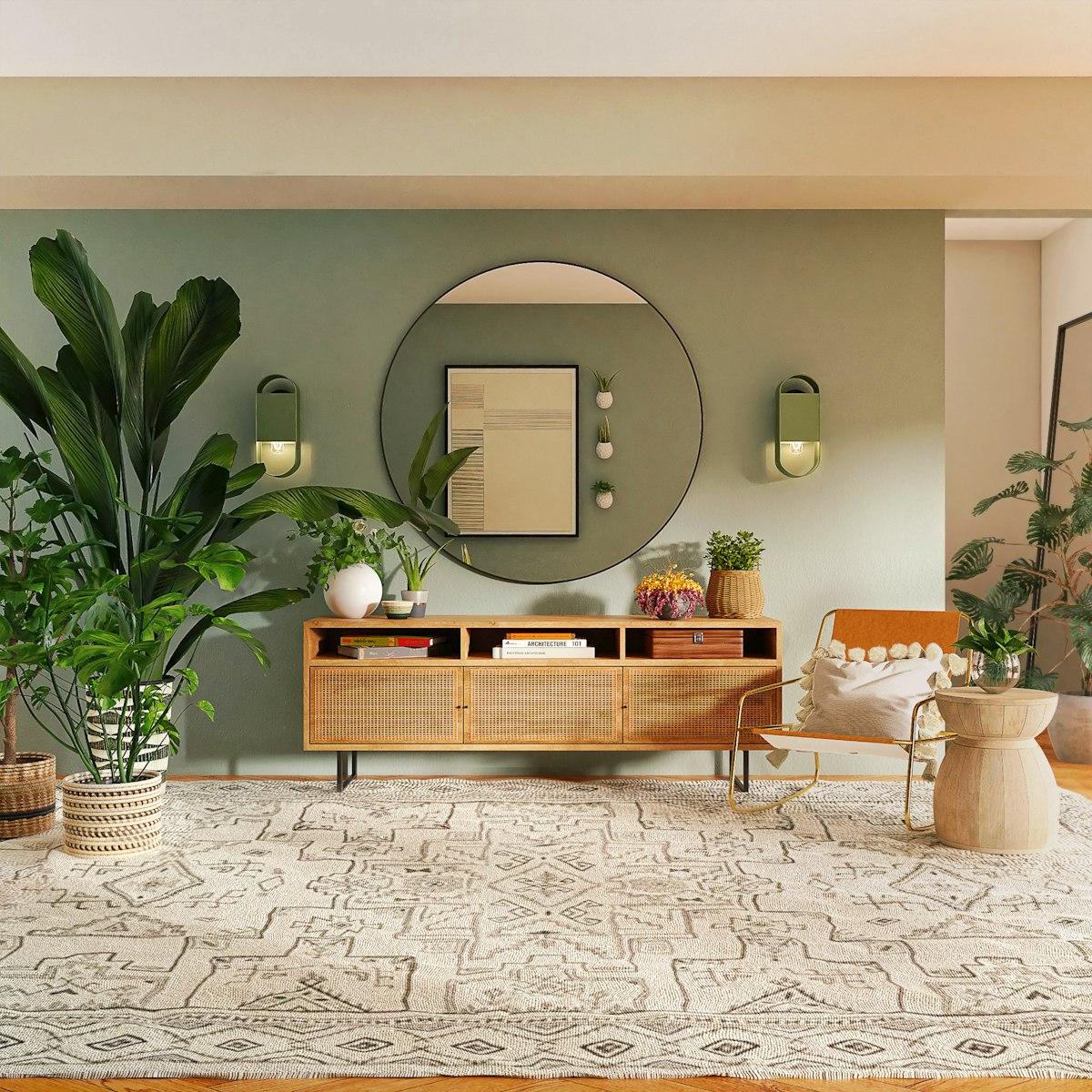
Grasscloth is the wallpaper that interior designers keep coming back to — not because it’s trendy, but because it solves a problem that paint and printed wallpaper both fail to solve: how do you make a wall feel alive without making it loud?
The answer is woven natural fiber. Grasscloth, jute, seagrass, and linen-weave wallpapers add texture that changes with the light, breathes with the room, and looks more beautiful in year three than it does in month one.
What Grasscloth Wallpaper Actually Is
True grasscloth is made by weaving natural plant fibers — grass, jute, seagrass, abaca, or sisal — onto a paper backing. The fiber is harvested, dried, and hand-woven in small batches, which means no two rolls are identical. The subtle variation between rolls is expected and actually contributes to the finished look, creating a wall that reads as a single natural surface rather than a repeating pattern.
The category also includes linen-weave and burlap-effect wallpapers that use woven textile rather than plant fiber. These behave similarly but offer a slightly more refined, less rustic result. Browse our designer wallpaper collection for grasscloth and textured natural-fiber options.
Grasscloth in Living Rooms
The living room is the strongest grasscloth application in most homes. The reasons are practical as well as aesthetic: living rooms are where you spend the most time, where the walls are most visible across different lighting conditions, and where the warm depth of natural fiber has the most impact.
All four walls vs. one accent wall: For grasscloth, all four walls almost always looks better than one. The material creates a unified interior surface — a room within a room — and the effect is lost when only one wall is covered while three adjacent walls are flat paint. If budget is a constraint, cover the three main walls and skip the fourth (usually behind the sofa or entertainment center).
Color guidance: Warm neutrals — oat, natural, warm linen, aged honey, driftwood — are the most versatile. They read as neutral while adding warmth that cool grays and whites can’t match. For rooms with existing warm wood tones, honey and amber grasscloth looks particularly rich. For rooms with more contemporary furnishings, pale natural or linen-tone grasscloth reads as refined without being rustic.
Grasscloth in Bedrooms
Bedrooms benefit from grasscloth for a different reason: calm. The natural material creates a visual quiet that synthetic surfaces don’t achieve. A bedroom with grasscloth walls and linen bedding has a complete material coherence — everything feels like it came from the same world.
Which walls to cover: In bedrooms, the wall behind the bed (the headboard wall) is the most impactful single-wall choice. It creates a built-in backdrop that makes the bed feel more anchored and designed. Covering all four walls works here too, especially in primary bedrooms where you want a fully enveloped, retreat-like quality.
Color in bedrooms: Soft sage, dusty clay, warm greige, and pale terracotta all work beautifully in bedrooms. Darker tones — olive, charcoal-linen, deep natural — create moody, intimate bedrooms that feel genuinely restful.
Practical Considerations
- Seams are visible. Unlike printed wallpaper with pattern-matched seams, grasscloth seams are always somewhat visible. This is accepted and expected — but if you have wall features (windows, doors, alcoves) that would create many short drops, consult an installer before ordering.
- Not washable. Grasscloth cannot be scrubbed or wiped. It’s not suitable for high-traffic areas (mudrooms, kitchens, children’s rooms) or walls adjacent to sinks. Living rooms and bedrooms are ideal; entryways with limited traffic can work.
- Humidity sensitivity. True plant-fiber grasscloth can absorb moisture and is not suitable for bathrooms or very humid climates without careful ventilation. Linen-weave and synthetic-backing versions are more humidity-tolerant.
- Professional installation recommended. The variation between rolls requires an experienced installer who knows how to manage seams and transitions.
If you’re considering grasscloth for a home in Central Washington — in Wenatchee, Cle Elum, or Yakima — our design team can help with material selection and installation guidance. Free consultations are available.
Shop grasscloth and textured wallpaper
Natural, linen-weave, and textured wallpapers — curated for living rooms and bedrooms.
Frequently Asked Questions
What is grasscloth wallpaper made of?
Natural plant fibers — grass, jute, seagrass, sisal, or abaca — woven onto a paper backing. The handwoven process means no two rolls are identical. Linen-weave wallpaper uses woven textile rather than plant fiber but has a similar aesthetic.
Can grasscloth wallpaper go in a bedroom?
Yes — bedrooms are one of the best applications. The natural material creates a visual calm that synthetic surfaces don’t achieve. The headboard wall is the strongest single-wall choice; covering all four walls creates a fully enveloped retreat quality.
Is grasscloth wallpaper hard to maintain?
It cannot be scrubbed or washed, so it’s not suitable for high-traffic or high-humidity areas. Living rooms and bedrooms are ideal. Dust gently with a soft brush; spot clean very carefully if needed.
Are grasscloth wallpaper seams visible?
Yes — grasscloth seams are always somewhat visible, which is accepted and expected. This is not a defect. A skilled installer minimizes seam visibility, but some will show, particularly in raking light.
How much does grasscloth wallpaper cost?
Quality grasscloth ranges from $8–$25+ per square foot installed, depending on material, source, and labor. Natural plant-fiber grasscloth tends to cost more than linen-weave or faux-grasscloth alternatives. Budget for professional installation.