
The most persistent piece of advice about small rooms is: keep it light, keep it simple. Don’t use dark colors. Don’t use bold patterns. Play it safe.
This advice leads to a lot of rooms that are technically inoffensive and completely forgettable. The truth is that small rooms, handled with intention, are often the most beautiful rooms in a home. Wallpaper is one of the most powerful tools for making them work.
Here’s what actually works in small rooms — and what genuinely doesn’t.
The Counter-Intuitive Rule: Go Bigger Than You Think
The most common mistake in small rooms is choosing wallpaper that is too small in scale. A tiny floral repeat in a 5×8 bedroom creates visual noise — the eye has nowhere to rest. A large-scale botanical or a bold single-color textured wallpaper in the same room creates impact and often makes the space feel larger, because the eye reads the pattern as an intentional statement rather than background clutter.
The rule: In a room under 150 square feet, go at least one scale larger on pattern than your instinct suggests.
The “Jewel Box” Approach: Go All In
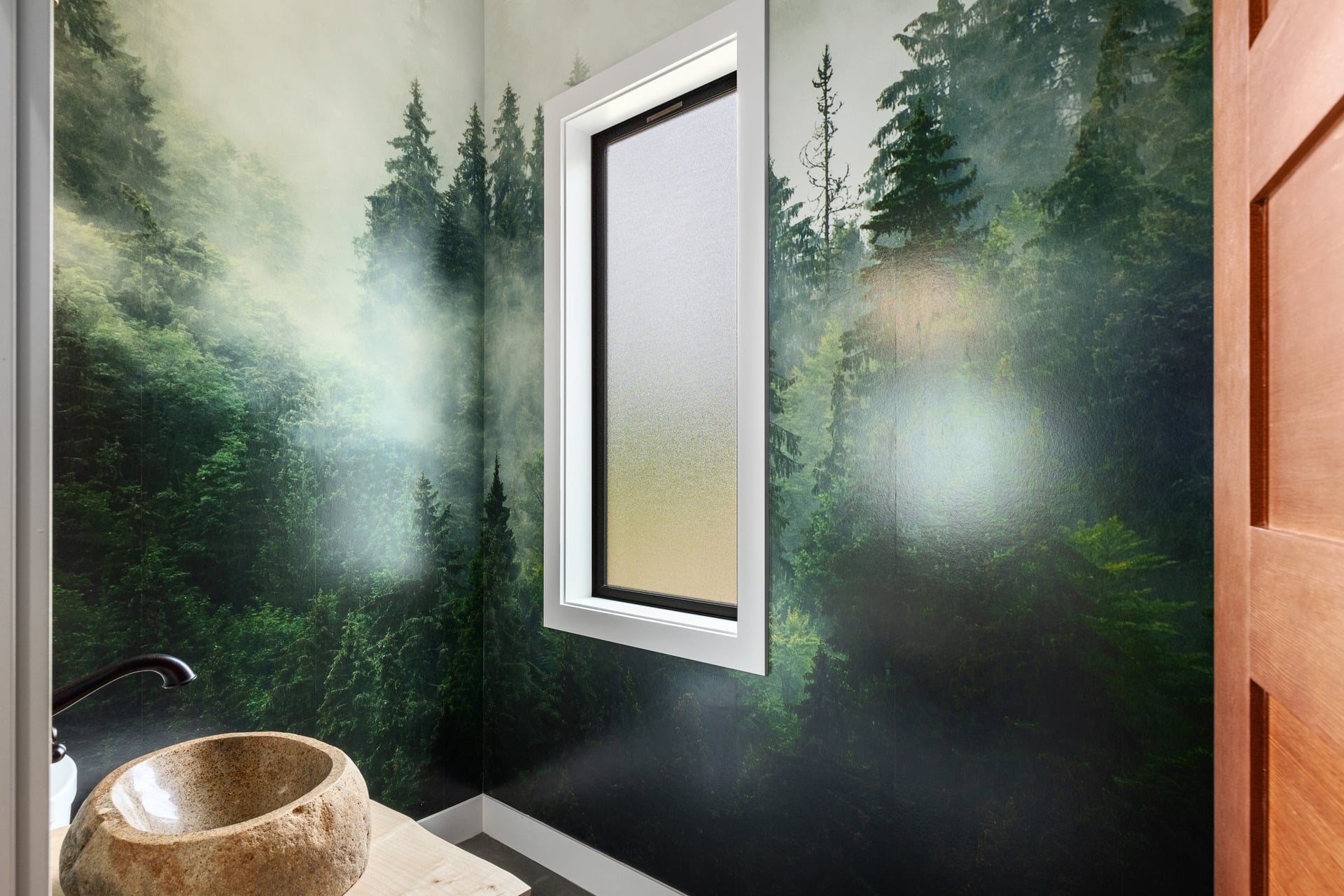
The most successful small rooms with wallpaper are often the most committed ones. Powder rooms, small dressing rooms, compact studies, and reading nooks where wallpaper covers all four walls — floor to ceiling, full pattern — create what designers call the jewel box effect. The small room becomes a complete world rather than a partial attempt at decoration.
This works because: the space is bounded, so the pattern repeats in a way that feels curated rather than overwhelming. And because you’re not in the room for long stretches, the drama doesn’t tire you out.
Our powder room wallpaper guide covers this approach in depth.
Best Wallpaper Types for Small Rooms
1. Large-Scale Botanical (Top Choice)
Oversized leaves, garden scenes, and nature-inspired prints work exceptionally well in small rooms. The large scale creates presence; the organic subject matter creates warmth. Browse our botanical wallpaper collection.
2. Textured Neutral (The Quiet Option)
If bold pattern feels like too much commitment, textured wallpaper in warm neutrals — grasscloth, linen-effect, plaster-finish — adds depth and warmth to a small room without visual complexity. It makes rooms feel considered without making a statement. See our guide to quiet luxury wallpaper.
3. Vertical Stripe
Vertical stripes are one of the only patterns that genuinely create height in small rooms. A wide vertical stripe — in two closely related tones, or in one bold and one neutral — makes ceiling heights feel taller. Best in rooms where low ceilings compound the sense of compression.
4. Mural Wallpaper on One Wall
A single mural wall in a small bedroom, study, or entryway creates enormous impact without full-room commitment. See our mural wallpaper guide for how to choose and place it. Shop mural options here.
5. Moody Saturated Color (For the Committed Small Room)
Dark wallpaper in a small room is not a mistake — it’s a strategy. Deep forest green, navy, plum, or charcoal in a small room creates an enveloping, cozy atmosphere that large rooms can’t achieve. With the right lighting (warm, layered, non-fluorescent), a dark small room feels intimate and luxurious.
What Genuinely Doesn’t Work in Small Rooms
- Small-scale busy prints all over: A tiny floral or small geometric repeat across four walls in a small room creates visual noise and makes the space feel claustrophobic rather than cozy.
- Multiple competing patterns: One strong wallpaper statement is enough. A busy wallpaper plus patterned upholstery plus patterned rug is visual chaos in any room; it’s amplified in a small one.
- Cold white or pale gray wallpaper with cold overhead lighting: This combination makes small rooms feel clinical and stark rather than airy. Warm neutrals are always more flattering than cool ones.
- Very high-gloss finishes: Reflective wallpaper in a small room amplifies every light source. Unless deliberately theatrical, matte and satin finishes are more livable.
Using Peel and Stick in Small Rooms
Small rooms are ideal candidates for peel and stick wallpaper. The wall area is small, so material cost is lower; the contained application makes installation more manageable for first-timers; and removability lets you take risks you wouldn’t take with permanent paste wallpaper.
If you’re designing a small room in Central Washington and want help making the most of it, our team offers free design consultations. We work in Ellensburg, Wenatchee, Yakima, Cle Elum, and surrounding areas.
Find wallpaper for your small room
Botanicals, textured naturals, murals, and peel & stick options — curated for rooms where the right wallpaper makes all the difference.
Frequently Asked Questions: Wallpaper for Small Rooms
What is the best wallpaper for a small room?
Large-scale botanical prints, textured neutrals (grasscloth, linen-effect), and moody saturated colors used with intention work best. Avoid small-scale busy repeating prints. The “jewel box” approach — full-room commitment to a single bold paper — is often more successful than timid half-measures.
Does dark wallpaper make a small room feel smaller?
Not necessarily. With warm lighting (2700K or lower, layered sources), dark wallpaper in a small room creates an enveloping, intimate atmosphere — the room feels cozy and deliberate rather than small. It’s the cold overhead lighting that makes dark rooms feel oppressive.
What wallpaper pattern makes a small room look bigger?
Vertical stripes create height. Large-scale patterns read as more open than small-scale ones. Textured neutrals add depth without visual noise. A mural on one wall can create a sense of depth and distance. Avoid small, busy repeating patterns.
Can you use bold wallpaper in a small room?
Yes — often with better results than in large rooms. Small rooms benefit from full commitment. A bold botanical or dramatic mural in a small powder room or reading nook creates a jewel-box effect that is one of the most coveted looks in residential design.
Should I wallpaper a small room on all four walls or just one?
Both work, but with different approaches. All four walls in a small room requires a pattern confident enough to carry the full room — botanical, mural, or textured neutral. One accent wall in a small room requires a clear focal point to anchor the wallpapered wall. Avoid one patterned wall if the remaining three walls are painted an unrelated color.