
An accent wall done well can transform a room. Done poorly, it looks like an afterthought — a single wall with pattern that has nothing to do with anything else in the space. The difference between the two comes down to intention: choosing the right wall, the right pattern, and making sure everything else in the room supports rather than competes with the choice.
Here’s how to get it right.
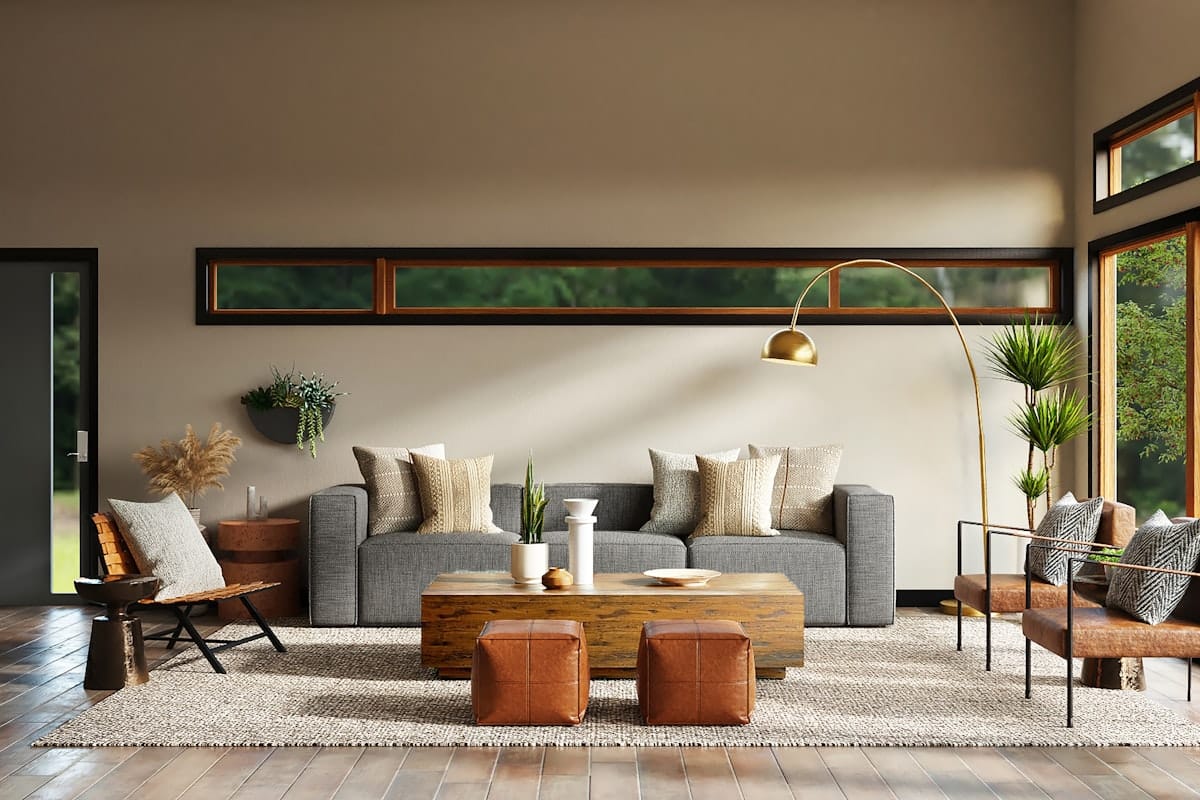
Which Wall Should Be Your Accent Wall?
Every room has a natural focal wall — the one your eye gravitates to first when you enter. In most cases:
- Living room: The wall with the fireplace or the wall the sofa faces
- Bedroom: The wall behind the headboard
- Dining room: The wall you face when seated at the table
- Entryway: The wall directly opposite the front door
- Home office: The wall behind the desk (what shows on video calls)
If no clear focal wall exists, create one. A bookcase, a piece of furniture, or a fireplace surround can anchor a wall that would otherwise read as directionless.
What to avoid: A random wall with no visual anchor, a side wall that nobody naturally faces, or a wall interrupted by multiple doors.
Wallpaper Patterns That Make Excellent Accent Walls
Botanical and Nature-Inspired
Oversized botanicals, garden murals, and nature-inspired wallpapers in deep greens, ochre, and terracotta are the current first choice for accent walls — and with good reason. They’re expressive, photogenic, and work in a surprising range of decorating styles. Browse our wallpaper collection for botanical options at every scale and price point.
Textured Neutrals
Grasscloth, linen-effect, and plaster-finish wallpapers add warmth and dimension without introducing pattern. These work as accent walls in rooms where you want depth without drama — a bedroom feature wall, a home office background, a hallway that needs warmth without busyness. See our guide to quiet luxury design for how textured wallpapers work as focal points.
Mural Wallpaper
A full mural is the most committed version of the accent wall. The best rooms for this: dining rooms (the wall you face at dinner), entryways (the wall opposite the door), and primary bedrooms (the wall behind the bed). See our mural wallpaper guide for placement and scale guidance. Shop mural options here.
Moody Saturated Color
A deep forest green, plum, midnight navy, or charcoal wallpaper on a single wall creates a room that feels architecturally considered. The key is commitment — pale versions of these colors look tentative; the full saturation is what creates the effect. See our moody wallpaper guide for more.
Geometric and Abstract
Geometric patterns — especially large-scale, bold, or three-dimensional — work as accent walls in contemporary spaces where botanical prints would feel too traditional. The important rule: bold geometry on an accent wall requires restrained furniture and accessories. The pattern is the room’s statement; everything else supports it.
How to Make an Accent Wall Feel Intentional (Not Random)
The wallpaper accent wall fails when the rest of the room ignores it. Here’s how to make sure the rest of the room responds:
- Pull a color from the wallpaper for the room’s textiles. If the wallpaper has terracotta tones, introduce terracotta in a throw, cushion, or rug. The room becomes cohesive rather than compartmentalized.
- Keep adjacent walls simple. Paint remaining walls in a neutral from the wallpaper’s palette — not white if the paper has warm tones, not beige if the paper reads cool. The wallpaper should pop; the other walls should recede.
- Match the furniture scale to the pattern scale. Large-format, bold wallpaper needs substantial furniture that doesn’t get lost. Small-scale, delicate patterns suit lighter, more refined pieces.
- Use the accent wall as a furniture anchor. Place your primary piece of furniture (sofa, bed, console table, dining table) in direct relationship to the accent wall. The wall and furniture should feel like a designed composition.
Peel and Stick for Accent Walls
Accent walls are the ideal application for peel and stick wallpaper. Single-wall coverage means lower material cost, quicker installation, and no penalty for changing your mind. Many designers now use peel and stick for accent walls even in long-term homes, reserving traditional wallpaper for full-room treatments.
Ready to explore options? Our team designs accent walls across Central Washington — in Wenatchee, Yakima, Cle Elum, Suncadia, and surrounding areas. Free consultations are available.
Find your accent wall wallpaper
Browse our curated wallpaper collection — botanicals, textured naturals, murals, and peel & stick options for every accent wall.
Frequently Asked Questions: Wallpaper Accent Walls
What wall should be the accent wall?
Choose the room’s natural focal wall — the one your eye gravitates to first when you enter. In living rooms, it’s typically the fireplace wall or the wall the sofa faces. In bedrooms, it’s the wall behind the headboard. In dining rooms, it’s the wall you face when seated. The accent wall should have visual purpose, not just be a random wall.
What wallpaper patterns work best as accent walls?
Botanical and nature-inspired prints, textured neutrals (grasscloth, linen-effect), full-wall murals, moody saturated colors in deep green or navy, and large-scale geometric patterns. Choose based on the room’s existing furniture and how much visual drama is appropriate for the space.
Should the accent wall wallpaper match the rest of the room’s decor?
It should respond to it. Pull a color from the wallpaper and echo it in textiles (cushions, rug, throw). Keep adjacent walls in a neutral that recedes rather than competes. The furniture should anchor directly in front of the accent wall. The wallpaper should feel chosen, not random.
Is peel and stick wallpaper good for an accent wall?
Excellent. Accent walls are one of the best applications for peel and stick — smaller coverage area means lower cost and faster installation, and the removability allows for future changes without damage. Many designers now prefer peel and stick for accent walls even in permanent homes.
How do I make an accent wall look intentional, not random?
Choose a wall with visual purpose (a focal wall with furniture anchored to it). Pull colors from the wallpaper into the room’s textiles. Keep adjacent walls neutral. Place furniture in relationship to the wall. Make sure the pattern scale matches the furniture scale.