
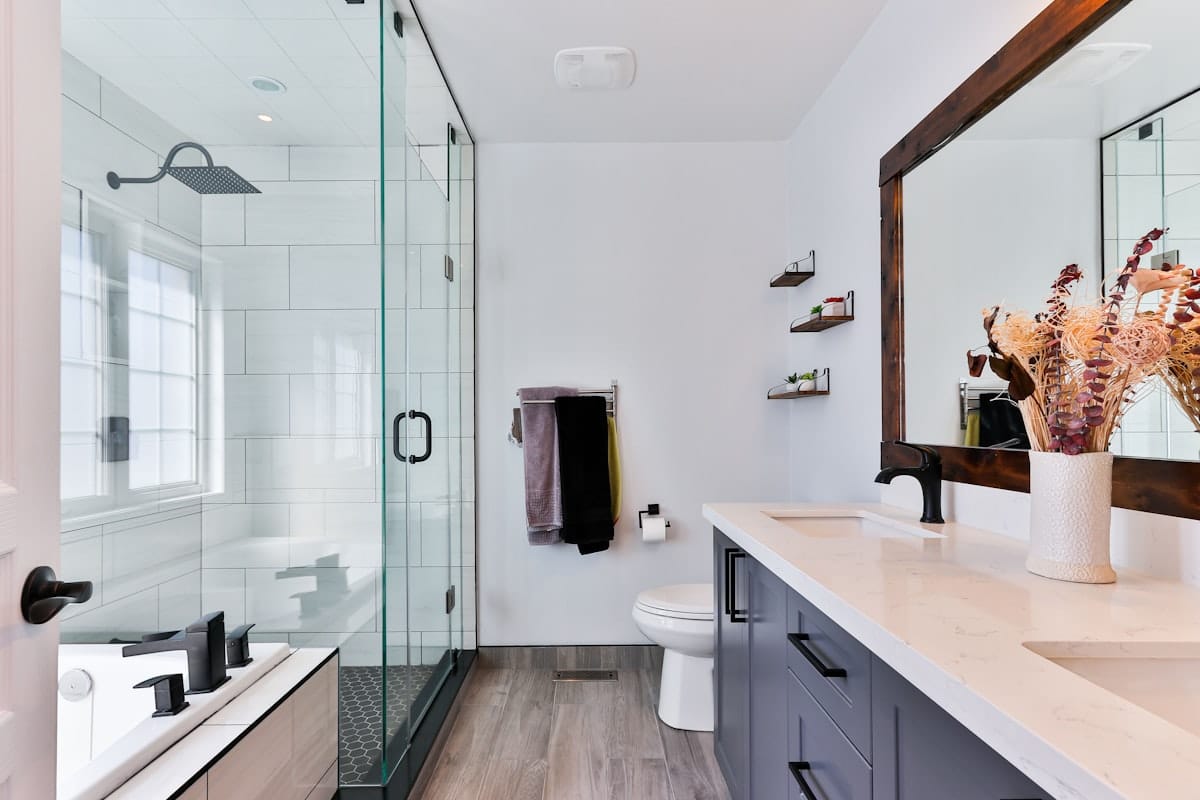
Large format tile has become the dominant choice for bathroom floors and walls in contemporary residential design — and the trend shows no signs of reversing. The appeal is clear: fewer grout lines, a cleaner and more seamless look, and a sense of scale that makes bathrooms feel larger and more intentional.
But large format tile also brings specific requirements that traditional tile doesn’t. Here’s what you need to know before you commit.
What Counts as “Large Format” Tile?
In residential design, large format typically means tiles that are 15×15 inches or larger. Common residential large format sizes include 18×18, 24×24, 12×24, 24×48, and increasingly 48×48 and slab-format porcelain. Each size category creates a different visual effect and comes with its own installation requirements.
Why Large Format Tile Works So Well in Bathrooms
Fewer Grout Lines
The primary visual advantage of large format tile is the dramatic reduction in grout lines. In a standard 4×4 tile floor, grout lines cover a significant portion of the surface and create visual busyness. In a 24×24 tile floor, the same square footage has roughly a quarter of the grout lines — the surface reads as clean, calm, and continuous.
Makes Spaces Feel Larger
The optical effect is real: minimal grout lines and large continuous tile surfaces make bathroom floors read as bigger. This is especially valuable in small and medium bathrooms where every visual trick helps. Matching the tile on floor and walls (tile drenching) amplifies this effect further — see our tile drenching guide.
Easier to Clean
Fewer grout lines means less grout to clean, seal, and maintain. In a wet area where mold and mildew are constant concerns, reducing grout exposure is a meaningful quality-of-life improvement.
Size Guide: Which Large Format Size Is Right?
- 18×18: Works in almost any bathroom size. The smallest true large format. A good entry point for those transitioning from standard sizes.
- 24×24: The most common residential choice. Creates excellent seamless effect without requiring perfectly flat substrate work.
- 12×24 (plank format): Versatile — works in herringbone or running bond patterns. Creates a different visual flow than square formats.
- 24×48: Contemporary and dramatic. Requires very flat, properly prepared substrate. Most impactful in bathrooms 60 sq ft or larger.
- 48×48 and slab format: High-end residential and hospitality look. Requires professional installation with significant substrate preparation. Most effective in large primary baths and wet rooms.
Material Choices for Large Format Tile
Porcelain (The Standard Choice)
Large format porcelain is the workhorse of this category — durable, water-resistant, and available in an extraordinary range of looks from stone imitation to wood-look to concrete-effect. For bathroom floors and walls, porcelain in a matte or satin finish is the most practical and design-forward choice. Browse our tile collection for large format options.
Natural Stone
Large format natural stone — honed marble, travertine, limestone — is the luxury option. The variation in natural stone is even more beautiful at larger formats. Requires sealing and more care than porcelain but creates an unmistakable quality.
Sintered Stone and Ultra-Compact Surfaces
Products like Dekton and Neolith are increasingly popular for large format applications. Ultra-thin, extremely hard, and available in very large formats. A high-end choice with excellent performance characteristics.
Grout Considerations
With large format tile, grout choices matter more than usual:
- Grout line width: Go as narrow as the tile manufacturer recommends. Large format tiles are typically installed with 1/8 inch or narrower grout lines to maximize the seamless effect.
- Grout color: A grout that closely matches the tile creates the most seamless appearance. A contrasting grout draws attention to the grid pattern — less typical with large format, but can be used intentionally.
- Epoxy grout: For high-moisture areas, epoxy grout is worth the premium. It doesn’t stain, doesn’t require sealing, and performs better long-term in wet conditions.
If you’re planning a bathroom renovation in Central Washington and want help with tile selection, our team offers free design consultations. We work in Wenatchee, Yakima, Kennewick, Ellensburg, Cle Elum, and throughout the region. Also see our bathroom tile trends guide for a broader overview of what’s working right now.
Explore large format tile options
From classic porcelain to stone-look — tile options for every bathroom style and budget.
Frequently Asked Questions: Large Format Tile
What size is considered large format tile?
In residential design, large format typically means 15×15 inches or larger. Common sizes include 18×18, 24×24, 12×24, and 24×48. Slab-format porcelain (48×48 and larger) represents the extreme end of the large format category.
Does large format tile make a small bathroom look bigger?
Yes — fewer grout lines and large continuous surfaces make floors read as bigger and cleaner. This effect is amplified when the same tile is used on both floor and walls (tile drenching).
What are the downsides of large format tile in a bathroom?
Large format tile requires a very flat, properly prepared substrate — unevenness that small tile hides becomes visible in large tiles. Installation is more complex and expensive. Not appropriate for DIY installation with sizes 24×24 and above.
What grout line width is best for large format tile?
Go as narrow as the tile manufacturer recommends — typically 1/8 inch or less. The narrower the grout line, the more seamless the surface reads. Use epoxy grout in wet areas for best long-term performance.
Can large format tile be used on bathroom walls as well as floors?
Yes — large format tile on walls is increasingly common and creates a striking unified effect. Ceiling installation (for tile drenching) is also possible with proper adhesive and substrate preparation, though it requires professional installation.