
The bedroom is one of the most rewarding rooms in a home to wallpaper — and one of the easiest to get wrong. The walls cover more surface area than any other element in the room, so the wallpaper you choose will set the temperature for everything that happens inside it: how you sleep, how you wake up, how the space feels at the end of a long day. At D. Marie Interiors, the bedrooms we love most are the ones where the wallpaper carries the room without shouting at it.
This is a designer’s guide to choosing wallpaper for a bedroom — pattern, scale, and color — without falling into the most common traps we see homeowners make on their own.
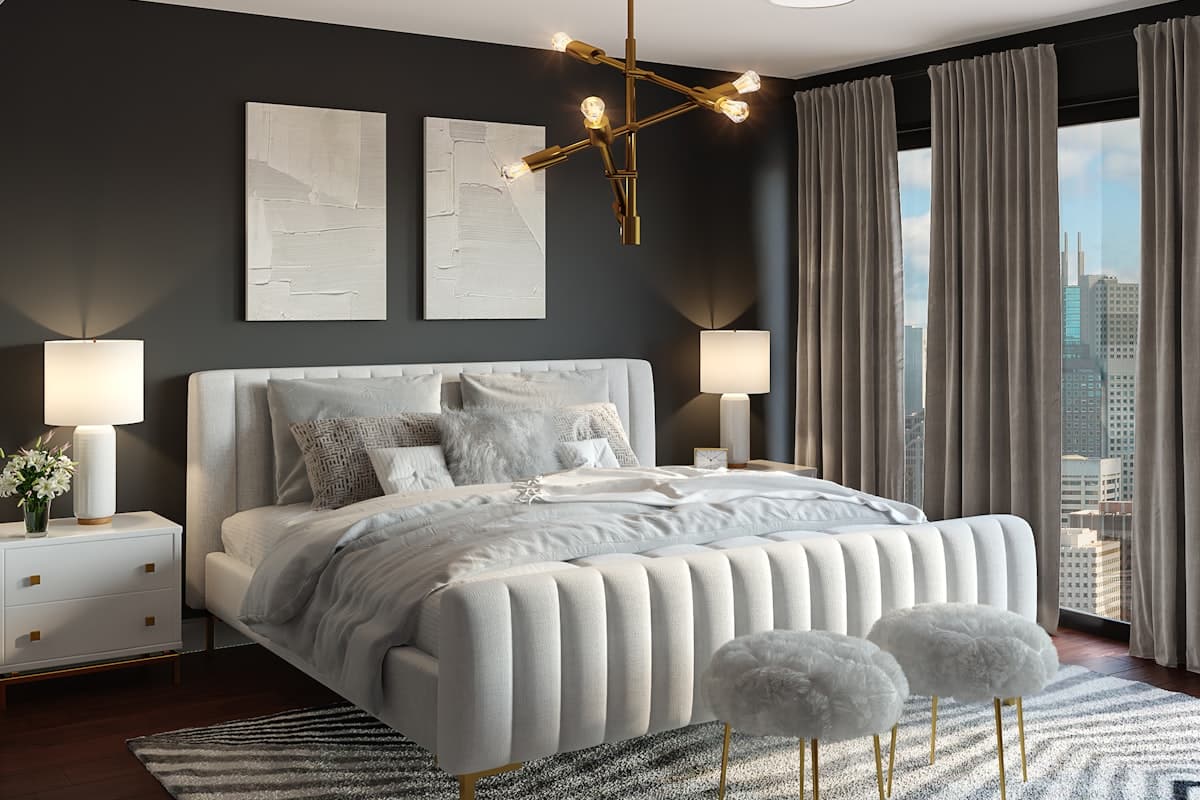
Start With How You Want the Room to Feel
Before you start looking at swatches, decide what the bedroom should do for you. A bedroom designed for deep sleep and slow mornings is a fundamentally different room than one designed to feel like a hotel suite or a romantic getaway. Every wallpaper decision flows from that single answer.
Three feelings cover roughly 90% of the bedrooms we design:
- Quiet and restorative. Lean toward textured neutrals, soft tone-on-tone patterns, or earthy botanicals in muted color.
- Layered and characterful. Mid-scale botanical, geometric, or heritage patterns work — color contrast is allowed, but stay within one color family.
- Bold and editorial. Large-scale murals, moody saturated colors, or oversized florals. This is the “hotel suite” bedroom, and it requires confident commitment.
Scale: The Single Biggest Variable
Scale is what most people get wrong. A pattern that looks rich and balanced on a small wallpaper sample can read as chaotic or flat once it covers a 12-foot wall. The fix is to look at scale relative to the room — not the sample.
Our rule of thumb:
- Small bedrooms (under 120 sq ft): small-to-medium scale patterns. Tiny prints can disappear; oversized patterns will overwhelm.
- Medium bedrooms (120–200 sq ft): medium-scale patterns are the sweet spot — botanicals, geometrics, or textured weaves at ~6–12 inch repeats.
- Large bedrooms (200+ sq ft): large-scale or mural-style wallpaper has room to breathe. This is where dramatic feature walls actually pay off.
Designer Note: Always tape a full repeat of your sample to the wall — not a single tile. A pattern’s character lives in how it repeats, not in any one section. If you can’t see at least one full repeat, you can’t judge the wallpaper honestly.
Pattern: Match It to the Bed, Not the Room
The bed is the dominant object in every bedroom, so wallpaper has to be chosen against it — not against the floor plan. A simple upholstered bed in a solid linen will hold its own against almost any pattern. A carved wood frame or a tufted statement headboard already has presence, so the wallpaper needs to soften and recede behind it.
If the headboard has visual weight, choose:
- Tone-on-tone textured wallpaper (grasscloth, plaster-effect, embossed)
- Small-scale geometric or soft botanical in a low-contrast palette
- Single feature wall behind the headboard only — leave the other three walls calm
If the bed is quiet, the wallpaper can take more risk — that’s when wrapping all four walls in a botanical or a mural-scale pattern starts to make sense.
Color: Anchor It to What’s Already in the Room
The color in the wallpaper should connect to at least two existing elements in the room — bedding, rug, art, ceiling, trim, or fixed millwork. Wallpaper that introduces a brand-new color family almost always reads as disconnected once it goes up, no matter how beautiful it looked in the sample.
A few palettes that consistently photograph well in bedrooms:
- Mossy green + warm cream + brass. Calming, slightly heritage, and forgiving with any wood tone.
- Soft terracotta + bone white + black accents. Modern but warm — pairs especially well with linen bedding.
- Deep navy + raw oak + ivory. The “hotel suite” combination. Confident, masculine-leaning, and excellent for primary bedrooms.
- Plaster pink + walnut + butter cream. Romantic without being saccharine. A favorite for guest rooms.
Where to Wallpaper (and Where to Stop)
There are four placement choices in a bedroom. Each one creates a different feel:
- Headboard wall only. The most popular and the lowest-risk move. Treats wallpaper as art and lets the rest of the room breathe.
- All four walls. Best for tone-on-tone textured wallpaper, or for small bedrooms where you want a “wrapped” feeling. Avoid loud patterns here.
- Ceiling only (“the fifth wall”). A favorite move for small primary bedrooms and any bedroom with high ceilings. Adds atmosphere without sacrificing the wall art real estate.
- Inside a built-in nook or niche. A subtle, high-impact touch that frames the bed without committing the whole room.
Common Mistakes to Avoid
From years of bedroom installations, these are the patterns we see repeat:
- Choosing wallpaper from a swatch without seeing it under the room’s actual evening light. Bedrooms are mostly experienced in low, warm lighting — judge the wallpaper in that light.
- Picking a pattern that competes with patterned bedding. One pattern leads; the other supports.
- Ignoring scale of the headboard. A king-sized headboard against tiny-print wallpaper always looks unbalanced.
- Skipping the primer step on a peel-and-stick install. Most “wallpaper doesn’t stick” complaints come from skipping primer or rolling wallpaper over fresh paint.
If you’re considering wallpaper for a primary or guest bedroom and want help narrowing it down to two or three options that will actually work for your room, our designers offer remote and in-home wallpaper consultations across Central Washington, including Wenatchee, Yakima, and Suncadia. We also handle peel-and-stick wallpaper installation directly if you’d rather not DIY.
Looking for inspiration first? Our designer’s guide to current wallpaper trends and our grasscloth and textured wallpaper guide are the right places to start. For a side-by-side decision between wallpaper and paint, see our room-by-room wallpaper vs. paint comparison.
For broader trend context from outside the studio, Architectural Digest’s wallpaper trend coverage and Elle Decor’s design archive are reliable starting points.
Frequently Asked Questions
Should wallpaper go on all four bedroom walls or just one?
For most bedrooms, one feature wall behind the headboard delivers the highest visual return with the lowest commitment. Wrap all four walls only when the wallpaper is textured, tone-on-tone, or otherwise quiet enough to feel like a backdrop — not a statement.
What’s the best wallpaper scale for a bedroom?
Medium-scale patterns — 6 to 12 inch repeats — work in almost every bedroom size. Small bedrooms benefit from medium-small prints; large primary bedrooms can support mural-scale or oversized botanical patterns without feeling chaotic.
Does wallpaper make a bedroom feel smaller?
Not when chosen well. Light, textured, or tone-on-tone wallpaper can actually make small bedrooms feel warmer and more deliberate. The mistakes that shrink a room are high-contrast small prints and dark wallpapers paired with low ceilings and minimal natural light.
Can I wallpaper the ceiling in a bedroom?
Yes — and it’s one of our favorite moves. A wallpapered ceiling adds depth without taking wall space away from art, mirrors, or sconces. Best paired with a calm wall color and used in rooms where you spend time looking up: bedrooms and powder rooms top the list.
How much does it cost to wallpaper a bedroom?
Material cost typically ranges from $35–$200+ per roll depending on brand and finish, with a standard bedroom needing 6–12 rolls. Professional installation in Central Washington usually runs $300–$900 per wall depending on prep work, ceiling height, and pattern matching. Peel-and-stick installs cost less because removal and prep are simpler.
Ready to wallpaper your bedroom?
Our designers can help you choose the right pattern, scale, and color for your room — and our install team handles the rest. Serving Wenatchee, Yakima, Suncadia, and all of Central Washington.